Environment Cabinet Secretary Aden Duale announced that since January 2024, Kenyans have successfully planted 481 million trees, highlighting the collective movement aimed at combating climate change.
During his address at the Arboretum, CS Duale praised the public for their active involvement in the government’s ambitious goal to plant 15 billion trees by 2032.
This initiative seeks to diminish greenhouse gas emissions that linger in the atmosphere for centuries, thereby safeguarding both current and future generations.
Duale also addressed the challenges posed by the Nairobi River, reaffirming the government’s commitment to restore the river’s cleanliness within 18 months. To achieve this goal, the Cabinet Secretary announced plans to introduce a color-coding system for household waste to distinguish between recyclable and non-recyclable materials.
“What you see behind me is not a river; in 18 months, we aim to present a clean Nairobi. We have taken notice of companies, slaughterhouses, and the Nairobi sewerage services,” stated Duale.
He further emphasized the need for accountability from Nairobi Governor Johnson Sakaja, expressing a desire to track the disposal practices of garbage collectors.
In April 2024, the government officially changed Utamaduni Day to Mazingira Day, following President William Ruto’s endorsement of the Statute Law (Miscellaneous Amendment Bill, 2024). This initiative is designed to inspire Kenyans to engage in environmental conservation efforts, particularly through tree planting.
Shortly after taking office, President Ruto encouraged citizens to plant a minimum of one hundred trees each as a means to combat the severe effects of climate change.
“As a nation, we must acknowledge the pressing challenges of climate change we face as part of the global community. We are witnessing the most severe drought in four decades, underscoring our urgent need to address this issue,” Ruto remarked in Kirinyaga County on October 15, 2022.
“Every Kenyan—50 million of us—should plant at least 100 trees, whether in your backyard, on your farm, or anywhere else you can. This is the most effective way to restore our climate, ensuring we have water, can cultivate crops, develop dams, engage in agro-processing, and ultimately achieve prosperity,” he added.
The family of Mercy Kwamboka, a University of Nairobi student from Chiromo Campus, is seeking justice following the tragic discovery of her body, which was abandoned in a thicket in Mwiki.
The 20-year-old vanished from her home in Pipeline at around 11 PM after receiving a phone call, raising alarming questions about her disappearance.
Her mother, Stella Kerubo, expressed her anguish over the gruesome condition of Kwamboka’s remains, noting that her hands had been severely mutilated and treated with acid.
A key witness, who wishes to remain anonymous for safety reasons, recounted the disturbing moment he found Kwamboka.
It has come to light that her abductors had plotted to kill her, as her belongings, including her phone and money, were found at the scene where her body was discovered.
Authorities are currently conducting investigations to uncover the details surrounding the murder of Kwamboka and the circumstances that led to her body being left in a secluded area of Mwiki, Nairobi County.
Residents in the vicinity of the Kitui-Tana River county border are expressing serious concerns over ongoing violent conflicts and rising insecurity in the area.
A group of local leaders has advocated for a ceasefire and is urging the government to seek a lasting solution to these issues.
Mutha County Assembly Member Dominic Mwamisi voiced his concerns, stating that his ward has been significantly impacted by the violence.
“Community members are living in fear, especially after a newly constructed police station was damaged by herders from Tana River, and to date, no arrests have been made,” he remarked on Wednesday.
In light of these challenges, leaders and community members have agreed to convene a crucial security meeting next week to develop strategies to resolve the ongoing clashes.
Seven startups led by women in Kenya have secured a total of Ksh. 8.75 million through the Standard Chartered Women in Tech Program. These startups, which emphasize sustainability, were selected for their inventive use of technology and their dedication to creating social, environmental, and economic benefits.
In collaboration with @iBizAfrica-Strathmore University, the program identified these companies for their potential to foster sustainable solutions across various sectors, including agritech, health tech, biofuel technology, and recycling.
The recipients of this funding include Moma Renewable Energy, Hayah Cradle to Bloom, Zidallie, Gwiji for Women, Zaoshinani, AerialGIS, and PsychCare Clinic.
According to the program organizers, these startups have demonstrated excellence in addressing socio-economic challenges while aligning with the Sustainable Development Goals (SDGs). They have effectively leveraged emerging technologies like the Internet of Things (IoT), artificial intelligence, augmented and virtual reality, cloud computing, big data, blockchain, drone technology, and biometrics.
The awards ceremony, themed “Empowering Women for a Sustainable Future,” was officiated by Vincent Ogutu, Vice Chancellor of Strathmore University, and Kariuki Ngari, CEO and Managing Director of Standard Chartered Bank Kenya & Africa. Ngari emphasized the vital role of female leadership in promoting sustainable growth, stating, “We are extremely proud to celebrate the graduation of the seventh cohort of our Women in Tech program. Each of these extraordinary entrepreneurs embodies the innovation and resilience that Standard Chartered advocates.”
Since its inception, the Women in Tech program has provided support to over 64 women-led enterprises, with 32 businesses receiving seed funding to help expand their initiatives.
Authorities in Kakamega County are investigating a horrifying incident that unfolded in Ebusang’ang’a village, located in the Butsotso Central area of Lurambi Constituency.
The lifeless body of a woman, tragically without her head, was discovered in a maize field, leaving the local community in a state of shock and mourning. Residents are urgently seeking answers and swift action from local law enforcement.
The victim’s brother, heartbroken by his sister’s untimely demise, shared that he last saw her on Sunday, October 6th. Struggling to grasp the reality of such a brutal act, he noted with anguish that the clothing found on the body did not belong to her.
He wept as he questioned, “What could she have possibly done to warrant such cruelty?”
This grisly murder has ignited widespread outrage among the villagers, who are calling for immediate changes within the local police department.
Frustration is palpable, with many community members voicing their displeasure and accusing authorities of neglecting their safety.
“We need a complete overhaul of the officers at this station; they are not protecting us,” declared one furious resident.
Hello followers. Welcome to another day of our GOAT FARMING TRAINING
In today’s training, we will share some much-needed tools and Equipment that should Be available on your farm 24 x 7.
For the hassle-free goat farming business these tools and equipment are much needed.
It is essential to have a good tool, but it is also essential that the tool should be used in the right way.
What are Goat farming Equipment?
Goat farming Equipment are the tools that are required for the operation and daily needs of farms.
Without these tools and equipment, you cannot manage more than 25 goats, or in other words if you want to save your time, then you should definitely buy this equipment for your farm
As a new goat farmer, it may seem overwhelming trying to figure out what you need for proper care of your animals. It is always good to prepare for what you need ahead of time but more often than not, the list of items needed is never exhausted.
Having the right tools needed for taking care of goats means that you are well equipped for the processes needed for goat maintenance at various stages of development.
A vet will come in handy as the first resource that should be involved in goat rearing but some tools are necessary for saving time on the farm.
My dad (a guy who could build anything, from any kind of material—wood, concrete, metal …) taught us to treat tools as an important investment, so I will offer up his advice: “Take your time acquiring your tools (and equipment), but get the best quality you can afford and they will serve you for years.”
Don’t make the mistake of buying every little thing you see; unless you are fabulously wealthy, you can quickly break the bank on stuff that doesn’t get used and ultimately takes up valuable storage space, gets thrown away, or sold at a throw away price.
For a tool or implement that will only be used a few times, consider renting it—or bartering for its use with a neighbor.
Burdizzo castrator
If you are raising goats for meat then Burdizzo castrator is the much needed tool for you.
If you castrate the goat then their weight gain is more than normal weight gain per month.
For example, the uncastrated goat gains 3 to 4 kg per month but the castrated goat gains weight from 5 to 6 kg per month.
The castrated goat has more fat in their body weight compared to uncastrated goats. People love to eat castrated goats compared to buck because castrated goat meat is tastier, leaner, and less smelly.
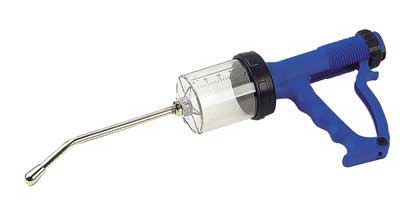
Drencher
Drencher is another much-needed equipment in goat farming. Sometimes you have to feed the goats orally.
You also have to deworm and giving medicines orally, this is a problem-solving tool if you have more goats.
In this tool you have to fill the medicine or dewormer once, after that you can feed to goats continuously no need to fill the syringe from medicines again and again.
Waterers for goats
Goats drink 1.5 liters of water in a day, fresh & clean water provided to goats is necessary otherwise it can turn into a major disease.
Don’t let them drink the storage water, always provide them fresh and clean water for their better health.
Most of the disease spread from the infected water. Water should always be outside, inside water can wet the floor and goats don’t like wet floors even they don’t sit on wet floors.
Goat Weighing machine
The weighing machine is also the needy tool of the farm that measures the flock’s productivity. The productivity can be measured by checking the weight of the goat.
If the goat gains weight then its productivity has increased or the goat is free from disease.
If the weight is decreasing then something is missing.
You can check it by measuring the weight of goats every month. A weighing machine is the common tool of the farm. It should be different from other weight machines.
The shape of this machine should be 3 x 5 for easy measurement.
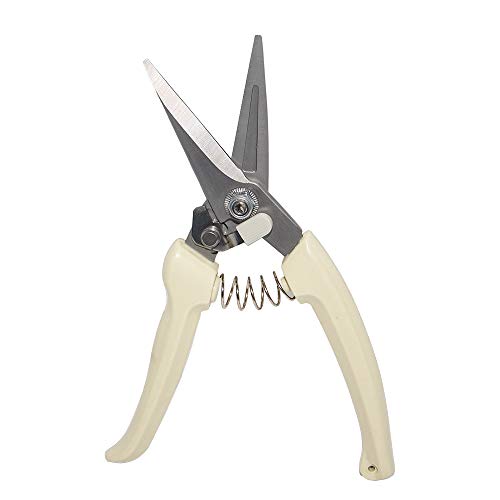
CLIPPERS
Goats are prone to lice infestation when their body hair becomes very long. When it is cold, the hair may be left to stay on for warmth but have plans of getting rid of it when the season is over.
It is recommended to clip goat’s hair annually so the start of the hot season should be an appropriate time.
Short hairs allow the sun to warm the skin directly and this kills lice that may be harboring there. It is recommended to get different blades for the face and body.
HOOF TRIMMERS
This is a necessary tool for goat farmers because the hooves may need trimming from as early as one month old. Prepare a schedule for monthly trimming as the rate of regrowth is very high.
RECTAL THERMOMETER
Rise in temperature is the first indication that your goat is ill and needs medicate or veterinary checkup. Having a rectal thermometer gives you the ability to tell if your goat is sick before calling for help or putting it on medication.
Buckets and feed scoops
Buckets hold grain and water plus they’re great for storing smaller pieces of equipment in the feed room, and for mixing soapy water for goat baths.
You can buy round buckets in nearly any color of the rainbow, or flat-back buckets that fit flat against a wall or fence.
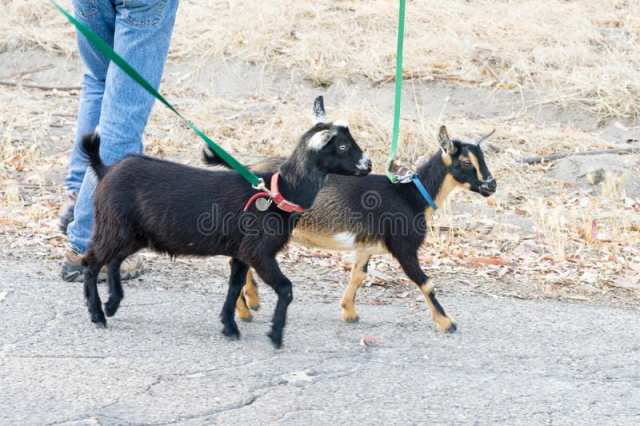
Collars and leashes
Collars and leashes help you to control your goats. For safety reasons don’t keep collars on your goats all the time, but have them handy to grab goats when you need them, in several places in the barn and tack room.
Dog collars work fine if you can find them with a metal buckle – Plastic buckles don’t last as long. But if you plan to leave collars on your goats all the time, you can buy plastic chain collars that will break easily if the goat gets caught on a fence or a branch.
Chain collars aren’t recommended for use when tying a goat.
MINERAL FEEDER
Goats need minerals that are available free-choice, so get a mineral feeder to hold them. This is also what you can use to feed grains to your milking does on the milk stand.
This particular feeder hangs over a fence; others attach to the wall with screws. If possible, position your mineral feeder under a roof to keep the minerals dry.
Some mineral feeders are divided into two cavities, one for mineral, the other for baking soda.
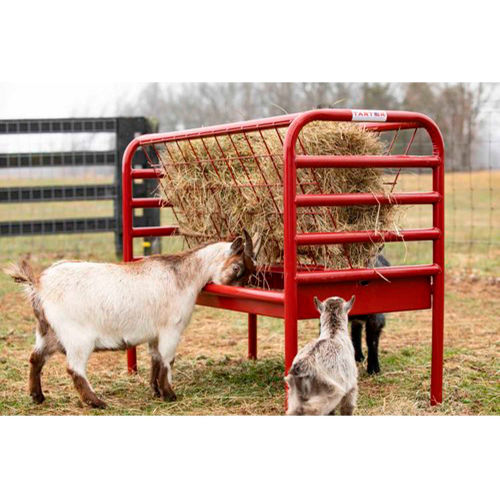
Hay feeder
Goats love to strew hay around, sleep in it, poop on it… in other words, they like to waste hay. And once their hay hits the ground, they are not going to touch it.
Plus your goats are less likely to suffer from internal parasites if they don’t eat their hay on the ground.
The steel hay rack above can hold two flakes of hay up off the ground. It is a great investment!
MILKING TOOLS
You will definitely need milking tools for your farm. Tools such as milking buckets, milking machine (If you have many dairy goats) e.t.c.
Portable milking machines are widely used in small, medium and large farms.
Also you will need machines and equipment for milk value addition if you are planning to make yogurt, cream, milk ice cream, cheese e.t.c
Hand tools
Every farm needs a variety of hand tools. Jua kali men make hand tools that will last for generations.
First on my list of items to purchase: A 25-foot and a 100-foot tape measure; a good claw hammer with a comfortable grip; electrician’s pliers; a socket and driver set; adjustable wrenches in several sizes; a screwdriver set with both regular and Phillips head drivers.
Garden tools
Every small farm needs a flat spade, pointed spade and a jembe for digging.
A good digging fork is a multipurpose tool, used for breaking up and turning soil in the garden, harvesting, and for manure cleanup around the barn.
For big farms, tractors can be used.
Fencing tools
Farms and fences go hand-in-hand. Plan on purchasing a fence-post driver. A driver is a heavy iron tube that goes over the top of a T-post, and that has handles on the side. You use it to pound the post into the ground.
A pair of fence pliers is a great, and fairly inexpensive, specialty tool to have.
Also barbed wire or chain link wire can be used for Fencing.
Miscellaneous
You need gumboots, overalls and hand gloves.
Heavy-duty flashlights are a must when the lights go out during a heavy storm or at night, or when you need to tend to a livestock emergency in the pasture at 2 am.
Garden hoses are a must, but when buying, purchase the longest and strongest available.
The last miscellaneous tool on the list is a digging bar. Used for digging large rocks out of the garden, construction sites, or fence holes; and for prying apart incorrigible packages!
END OF DAY 5 GOAT FARMING BUSINESS TEACHING SESSION
We now come to the end of today`s teaching session.
Our blog is now open for questions and discussions on what we have learnt today.
Also below is a PDF file containing notes on what has been taught today.
A tragic incident occurred in Machakos County, where a 9-year-old boy lost his life after drowning in a fish pond.
According to police reports, the drowning took place in Mamba A village, situated in the Ndalani area of Yatta Constituency. It was discovered that the grade four student had obtained the keys to the secured fish pond without his parents’ awareness.
The local chief, Cosmas Kaloki, stated that residents from Mamba Sub Location were responsible for recovering the boy’s body.
Subsequently, the body was transported to Mbaku Funeral Home in Matuu. Authorities have indicated that an investigation into the incident is currently underway.
Julius Ogamba, the Cabinet Secretary for the Ministry of Education, has guaranteed that this year’s national examinations will be conducted securely, emphasizing that the government has implemented sufficient measures to prevent any irregularities.
Speaking at the Siala Technical and Vocational Training Center in Rongo, where he participated in a tree-planting initiative, Ogamba expressed the ministry’s commitment to ensuring the integrity of the examination process.
He further stated that any individual in the education sector found participating in cheating will face severe repercussions, which may include expulsion.
“The security measures implemented for the exams this year are highly advanced. Our goal is to significantly reduce instances of misconduct. If anyone is found engaging in exam malpractice, the legal consequences will be enforced, and offenders may face penalties including disqualification from the education sector,” stated Ogamba.
The Cabinet Secretary has urged everyone involved in education to join forces with the government in promoting a trustworthy national examination process. Ogamba also acknowledged that the government is addressing various persistent challenges within the education sector.
He expressed disappointment that those who should be supporting the ministry in delivering effective services are instead discussing a deteriorating education system. He emphasized that every individual in the country has a vital role to play in the education landscape and should act in the best interest of the students.
Furthermore, Ogamba reassured that the ministry is actively working to ensure that learning activities for grade nine begin smoothly next year, highlighting ongoing initiatives such as the construction of additional classrooms.
The Competition Authority of Kenya (CAK) has declared the appointment of David Kemei as its new Director-General, a position he will officially assume on October 7. Kemei becomes the second individual to serve in this role, following a thorough vetting process and subsequent approval by both the National Assembly and the Senate. He brings with him more than 30 years of diverse experience across multiple sectors, including regulatory affairs, finance, academia, health, tourism, energy, commerce, and corporate governance, with 15 of those years spent in senior leadership positions.
“Mr. Kemei’s diverse expertise in corporate and financial management, accounting, project execution, resource mobilization, collaboration with international organizations, and stakeholder engagement will be a tremendous asset to the Authority. This will help us enhance market efficiency for consumers and drive economic growth,” stated Shaka Kariuki, chairman of the CAK board, in a press release on Monday.
The newly appointed head of CAK possesses an MBA and a bachelor’s degree in commerce from the University of Nairobi. He completed his high school education at Kapsabet High School in Nandi County, where he was a classmate of President William Ruto. Kemei’s professional experience includes roles at DGMB Training Solutions, the Electricity Regulatory Board (now known as the Energy and Petroleum Regulatory Authority), Nation Media Group, Windsor Golf Hotels and Country Club, and Kenya Shell (now Vivo Energy). Moreover, Kemei has held positions as chairperson and director at various organizations including Kenya Reinsurance Corporation, Zep Re, and Kenya Medical Training College, in addition to serving as chair of the audit committee at the Commission for Revenue Allocation. He has also been involved in academia, lecturing at five different universities.
Since January 2023, Adano Wario has served as the acting Director-General of CAK following the expiration of Wang’ombe Kariuki’s tenure. Kariuki, who was the inaugural Director-General of CAK, held the position from January 2013 for two consecutive five-year terms.
The mandate of CAK is to foster competition within Kenya and safeguard consumer interests against unfair and deceptive market practices. The Authority is tasked with preventing anti-competitive behavior in the economy, lifting barriers to free competition, and ensuring consumer rights are protected through investigations, prohibitions, and the regulation of unfair business conduct.
As part of his vetting process, Kemei has committed to tackling various issues, including the controversy regarding the entry of American satellite internet provider Starlink into the Kenyan market, should he be confirmed as head of CAK. He emphasized his dedication to ensuring the protection of local businesses while also allowing foreign firms the opportunity to compete and improve service delivery.”
The Kenya Power and Lighting Company (KPLC), the country’s leading electricity supplier, has revealed plans for customers to soon track power outages and request new electricity connections via its updated digital self-service platforms.
In an announcement made on Monday, KPLC highlighted that additional features available to customers on these digital platforms will include bill printing, customized and interactive messaging, and access to officially certified digital payment receipts.
Joseph Siror, the Managing Director of Kenya Power, emphasized that this initiative is essential for empowering customers to access services conveniently from a distance.
“Digital transformation is a pivotal element of our current corporate strategy, with an unwavering emphasis on customer focus throughout this journey. Our aim is to broaden the capabilities of our self-service platforms to deliver a more tailored experience for our customers,” he stated.
This initiative aligns with the upcoming 2024 Customer Service Week, which is dedicated to enhancing customer engagement for better service outcomes. At present, customers can conveniently check their electricity bills, purchase tokens, and report power outages and other issues through the USSD Code *977# and the Mypower App.
They can also submit meter readings to ensure accurate billing and verify the legitimacy of individuals claiming to be company representatives. The electricity provider announced a significant increase in the number of users of these self-service platforms, rising to 2.1 million from 1.7 million last year, reflecting customers’ preferred methods of interaction.
“This growth has fueled a rise in engagement, with interactions on the USSD platform reaching 19.89 million and 15.76 million on the Mypower App,” the statement revealed. “As a result of the heightened usage of digital platforms, foot traffic to the company’s banking halls has decreased by 75%.”
Additionally, the company has strengthened its workforce by adding 132 new employees to better manage customer inquiries and complaints.
To provide the best experiences, we use technologies like cookies to store and/or access device information. Consenting to these technologies will allow us to process data such as browsing behavior or unique IDs on this site. Not consenting or withdrawing consent, may adversely affect certain features and functions.
Functional
Always active
The technical storage or access is strictly necessary for the legitimate purpose of enabling the use of a specific service explicitly requested by the subscriber or user, or for the sole purpose of carrying out the transmission of a communication over an electronic communications network.
Preferences
The technical storage or access is necessary for the legitimate purpose of storing preferences that are not requested by the subscriber or user.
Statistics
The technical storage or access that is used exclusively for statistical purposes.The technical storage or access that is used exclusively for anonymous statistical purposes. Without a subpoena, voluntary compliance on the part of your Internet Service Provider, or additional records from a third party, information stored or retrieved for this purpose alone cannot usually be used to identify you.
Marketing
The technical storage or access is required to create user profiles to send advertising, or to track the user on a website or across several websites for similar marketing purposes.