


Home Blog Page 12

Ruto’s Anti-Fraud Crackdown in Health Sector Sparks Fears of Job Losses and Service Disruptions
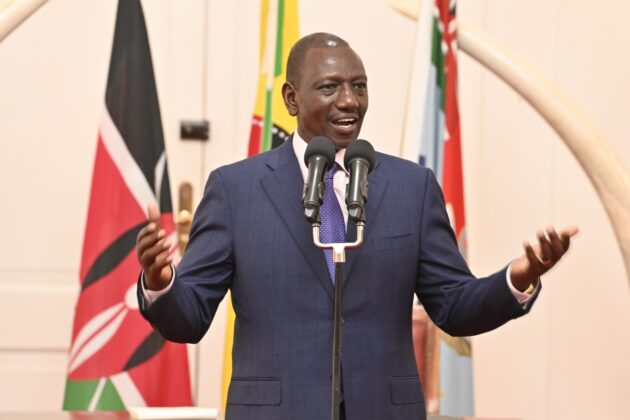
President William Ruto

Concerns are mounting across Kenya’s health sector following President William Ruto’s revelation that his government has shuttered over 1,000 medical facilities as part of a massive anti-fraud operation. The unprecedented crackdown is targeting healthcare providers linked to fraudulent activities under the Social Health Authority (SHA) — the recently established entity that replaced the National Health Insurance Fund (NHIF) in October 2024.

Speaking to members of the Kenyan diaspora in the United Kingdom on Thursday, July 3, President Ruto defended the move, saying it was essential to preserve the credibility, transparency, and effectiveness of the new healthcare scheme.

“The criminal elements that are staining SHA will not succeed,” Ruto said firmly. “We have tracked and closed over 1,000 medical facilities engaging in fraud.”

The President warned that the clean-up operation is still ongoing and indicated that more health centers could be closed in the coming days. He emphasized that rooting out corruption was vital to ensure that SHA — which was introduced to deliver universal healthcare — operates with integrity and serves all Kenyans fairly.

“This is not over. More [facilities] are on the way,” he declared. “Our health programme must remain efficient and incorruptible.”

SHA Outperforms NHIF, But at What Cost?

Despite the upheaval, President Ruto celebrated SHA’s performance since its launch. In just eight months, the Social Health Authority has reportedly served more than 4.9 million Kenyans, a figure the president claims surpasses what NHIF achieved over a similar period during its years of operation.

“Our Social Health Authority is working,” Ruto stated. “It is a transformative medical scheme that is already exceeding expectations.”

However, while the President painted a picture of progress, healthcare professionals, union leaders, and civil society organizations are expressing growing concern over the unintended consequences of the crackdown — including widespread job losses, service disruptions, and limited healthcare access, particularly in rural and underserved areas where many of the affected facilities were operating.

With over 1,000 clinics, hospitals, and health centers shut down nationwide, the ripple effects are beginning to be felt in communities that now face reduced access to medical care. The closures have also reportedly rendered many healthcare workers jobless, although the government has not yet released official data on the number of displaced personnel or the exact locations of the closed institutions.

Duale: Fraud in the Health System Was Rampant

The mass shutdown aligns with earlier statements made by Defence Cabinet Secretary Aden Duale, who addressed the issue of healthcare fraud during a stakeholder meeting at Tom Mboya Labour College in Kisumu on June 30. He confirmed that at least 35 private hospitals had already been shut down after investigations revealed they had submitted forged documents to gain SHA accreditation or had engaged in dishonest billing practices.

“Some of these facilities were charging inpatient rates for outpatient services to inflate claims,” Duale said. “That is criminal and unacceptable.”

The crackdown, while applauded by some for confronting systemic corruption, has sparked debate over whether the implementation process is being handled in a way that balances justice with public interest.

Growing Public Anxiety Over Healthcare Gaps

As fear and uncertainty grow, healthcare unions and advocacy groups are calling for the government to release detailed information about the closures, outline a plan to absorb displaced healthcare workers, and provide alternative solutions to ensure no region is left without access to essential medical services.

“There’s no question that fraud must be eliminated,” said one health sector analyst. “But the process must also be guided by compassion and foresight. Shutting down thousands of facilities without offering a safety net risks creating a crisis in healthcare access.”

With no clear plan announced for the redeployment of staff or the redistribution of patients affected by the closures, public confidence in the government’s rollout of SHA is being tested — even as President Ruto maintains that efficiency and integrity remain the administration’s top health priorities.

As the dust settles, many Kenyans — particularly those in remote areas — are left wondering what the real cost of reform in the health sector will be, and whether their access to affordable, quality care will survive the purge.

Social Health Authority (SHA)

Kirinyaga Coffee Farmers Protest After Court Extends Order Blocking New Exchange Fee Regulations

Local farmer picking coffee

Hundreds of coffee farmers from 76 cooperative factories in Kirinyaga County took to the streets of Kerugoya town on Thursday, staging spirited demonstrations in protest of proposed coffee exchange fees that they claim threaten their livelihoods and the stability of their cooperative system.

The protests came shortly after Kerugoya High Court Judge Edward Muriithi extended a conservatory order halting the enforcement of the Capital Market (Coffee Exchange) (Fees) Regulations of 2024. The judge pushed the effective suspension of the regulations to July 28, 2025, following a formal application by the Co-operative Bank of Kenya, which sought to be enjoined in the ongoing case.

The order, originally issued on February 19, 2025, was filed jointly by the Kirinyaga Slopes Coffee Brokerage Company and the Kirinyaga County Co-operative Union. The two entities sought judicial intervention to prevent the Capital Markets Authority (CMA) and the Competition Authority of Kenya (CAK) from implementing the new regulations, which they argue are punitive and could cripple small-scale farmers financially.

Reacting to the court’s decision to extend the stay order, visibly frustrated farmers gathered in large numbers within and outside the Kerugoya High Court precincts, hoping for a positive outcome. However, when it became clear that the controversial fee regulations were only temporarily frozen and not struck down entirely, the farmers’ frustrations boiled over.

Led by cooperative officials and vocal members of their societies, the farmers marched through the streets of Kerugoya, chanting anti-government slogans and singing protest songs. Their main grievance centered on what they described as the government’s attempt to impose a fee structure that would weaken cooperative societies, ultimately disadvantaging smallholder coffee growers who rely on collective bargaining power to earn sustainable incomes from their crops.

They further expressed dismay at the silence and inaction of local elected leaders, accusing them of turning a blind eye to the challenges currently facing coffee farmers. Many held placards demanding immediate action and policy reversal, calling on the government to abandon the new regulations, which they claimed would further erode the gains made in Kenya’s liberalized coffee sector.

Later in the day, the protestors marched to the Kirinyaga County Commissioner’s office, where they were received by Kirinyaga Central Sub-County Deputy County Commissioner Josephine Mwengi. Mwengi assured the farmers that their grievances had been heard and urged them to remain calm and allow the legal process to take its course. She also encouraged them to disperse peacefully, pledging to forward their concerns to the relevant government agencies.

The contentious regulations, introduced by the Capital Markets Authority, were meant to streamline and regulate the licensing and operation of coffee exchange brokers and other stakeholders within the value chain. However, stakeholders in Kirinyaga — a county known for producing some of Kenya’s highest quality coffee — argue that the fees introduced are disproportionate and would increase costs for farmers already struggling with rising production expenses and fluctuating global prices.

The legal challenge has since drawn the attention of national institutions like the Co-operative Bank of Kenya, whose involvement suggests the broader financial sector is closely monitoring the dispute due to its potential impact on cooperative societies and the agribusiness economy.

As the country awaits the court’s final ruling on July 28, the standoff underscores the ongoing tensions between government regulatory agencies and grassroots producers over the future of Kenya’s coffee industry — an industry that has historically been a key pillar of rural livelihoods and national export revenue.

Kirinyaga coffee farmers protest after court extends orders on proposed direct pay

David Mabuza, Former South African Deputy President Dies at 64

David Mabuza, South Africa's former deputy president

South Africa is mourning the loss of one of its seasoned political figures, David Mabuza, who has died at the age of 64. The news of his passing was confirmed by the South African Broadcasting Corporation (SABC) on Thursday, which reported that Mabuza died while receiving treatment at a hospital in Johannesburg. The specific illness that led to his death has not been disclosed, though SABC noted that he had been unwell and absent from the public eye for some time.

David Mabuza served as the country’s Deputy President from 2018 to 2023, under the leadership of President Cyril Ramaphosa. A former schoolteacher by profession, Mabuza carved out a notable political career that spanned decades, including his time as the Premier of Mpumalanga Province, a region he represented with significant influence in national politics.

Mabuza played a pivotal role in South Africa’s political landscape, especially in the internal power dynamics of the ruling African National Congress (ANC). Political analysts credit him with being a key ally in Cyril Ramaphosa’s narrow victory in the highly contested 2017 ANC leadership race, a win that paved the way for Ramaphosa to become South Africa’s president in 2018 following the resignation of Jacob Zuma amid corruption scandals. Mabuza’s ability to mobilize support from key provincial factions was widely seen as instrumental in shifting the balance in Ramaphosa’s favor during the ANC elective conference.

Despite his significant contributions, Mabuza’s political career was not without controversy. He faced persistent allegations— which he consistently denied— relating to irregularities in the awarding of tenders, including a controversial contract linked to the construction of a stadium for the 2010 FIFA World Cup. He was also mentioned in connection with alleged political violence in Mpumalanga, including links to political killings, though no charges were ever formally brought against him.

In recent years, Mabuza had kept a notably low profile, leading to widespread speculation about his health and his role in the ANC’s evolving political terrain. His absence from major public and political events raised questions about his influence and his personal well-being, which were never fully addressed by official channels.

Mabuza leaves behind a complicated legacy— one marked by political strategy, regional power consolidation, and a significant but sometimes contentious role in shaping the leadership of post-apartheid South Africa.

As the country comes to terms with his passing, tributes are expected from across the political spectrum, recognizing both his service and the impact he had on South Africa’s modern political history. Funeral arrangements and official government statements are expected in the coming days.

Former Deputy President of South Africa David Mabuza

Police Summon Blogger Ndiangu’i Kinyagia as NPS Warns Against Fake Abductions

Missing Blogger Ndiangui Kinyangia Finally Appears in Court

The National Police Service (NPS) has officially asked blogger Ndiangu’i Kinyagia to present himself at the Directorate of Criminal Investigations (DCI) Headquarters to record a statement, following his recent disappearance and reappearance.

Kinyagia had been reported missing by his family on June 21, prompting a lawsuit against the State and the DCI over what was alleged to be an abduction. However, the narrative took a turn when Kinyagia resurfaced and appeared in court on Thursday, July 4. His family lawyer, Kibe Mungai, told the court that Kinyagia contacted his family on Tuesday evening, assuring them that he was alive and safe.

In a statement released shortly after his reappearance, the police confirmed that while Kinyagia remains a person of interest, he was never in police custody as previously claimed in both mainstream and social media.

“The National Police Service maintains that it did not hold Mr. Kinyagia at any point,” the statement read. “Nonetheless, we urge him to present himself to the DCI Headquarters and cooperate with the ongoing investigations.”

The NPS also expressed concern over what it called a growing trend of staged abductions, accusing certain individuals of faking disappearances to spark public outrage and generate misleading narratives. According to the Service, such actions are criminal offences that not only mislead the public but also tarnish the reputation of law enforcement and hinder the administration of justice.

“These criminal acts undermine the integrity of our operations, create public anxiety, and damage the image of the police service,” the NPS warned.

The Service further reiterated its commitment to constitutional values, stressing that it remains independent, impartial, and politically neutral in its mission to uphold law and order across the country.

The unfolding situation now places the spotlight back on Kinyagia, as the public awaits whether he will comply with the directive to record a statement with the DCI.

Blogger and tech expert Ndiangui Kinyagia, who had been reported missing since the previous week. [Photo | DCI]

Farouk Kibet Warns Protest Financiers, Reaffirms Kenya Kwanza’s Commitment to Unity and Development

Farouk Kibet and MP Didmus Barasa at women’s empowerment event held in Taita Taveta County on Thursday, July 3, 2025.

Farouk Kibet, a close aide to President William Ruto, has issued a strong warning to individuals allegedly funding violent demonstrations across the country, insisting that any attempts to destabilize the Kenya Kwanza administration will ultimately fail.

Speaking during a women’s empowerment forum held in Taita Taveta County on Thursday, Farouk took a firm stance against what he described as deliberate efforts to fuel unrest for political or personal gain. He emphasized that those using their financial resources to sponsor chaos and division were wasting their time and risking the peace and stability of the nation.

“Those spending money to incite and organize violent protests will not succeed in undermining this government,” he stated. “Instead of channeling their wealth into destructive causes, they should invest in uplifting women and empowering communities economically.”

Farouk went on to underline the Kenya Kwanza administration’s resolve to maintain peace and focus on development, asserting that no form of violence or political noise would distract the government from its mission to serve all Kenyans equally. He reiterated that the leadership under President Ruto is firmly rooted in the principles of inclusivity and national cohesion.

“We are not going to allow violence or political distractions to shake this government,” Farouk declared. “We are committed to serving every Kenyan, regardless of their ethnic background or region of origin. Ours is a government of unity, not division.”

He further reassured residents that under President Ruto’s leadership, no region or community would be left behind. Farouk stressed that tribalism would no longer define Kenya’s political landscape, noting that the government is determined to promote a culture of nationhood, equality, and shared progress.

“We are one Kenya,” he said. “Tribalism has no place in the future of this country. Today, you can see national leaders from across the country gathered here. That in itself is a message that we are united and focused on driving development and prosperity for all.”

Farouk’s remarks come amid rising political tensions and protests in parts of the country, with sections of the opposition accusing the government of failing to address key public concerns. His statements echo the administration’s call for peace, dialogue, and national unity as a foundation for economic growth and social harmony.

President William Ruto’s aide, Farouk Kibet, joined other national leaders at a women’s empowerment forum held in Taita Taveta County on Thursday, July 3, 2025.

Tragedy on Tala–Oldonyo Sabuk Road: One Killed, Another Injured as Pickup Overturns in Matungulu

The vehicle thta was involved in an accident along Tala - Oldonyo Sabuk Road in Katangini area, Matungulu subcounty on July 3, 2025.

A tragic road accident along the Tala–Oldonyo Sabuk Road in Katangini area, Matungulu Sub-county has left one man dead and another nursing serious injuries after a pick-up truck they were travelling in overturned and crashed into a maize plantation on the evening of Thursday, July 3, 2025.

The ill-fated vehicle, which was transporting ballast, is reported to have hit a large pothole, triggering a tyre burst that caused the driver to lose control. According to eyewitnesses, the pick-up rolled several times before coming to rest in a nearby field.

Tragically, both victims had been riding at the back of the pick-up, and were thrown off during the violent crash. One of the men died on the spot, while the other was rushed to Kangundo Level 4 Hospital, where he is currently undergoing treatment.

Police officers from Tala Police Station responded swiftly to the scene, where they documented the incident, moved the deceased’s body to Patjud Mortuary in Nguluni, and had the vehicle wreckage towed for inspection and further investigation.

A police officer, speaking on condition of anonymity, confirmed that investigations are underway to determine the exact cause of the accident and whether any negligence or mechanical failure contributed to the tragic outcome.

Residents in the area quickly gathered at the scene, expressing sorrow and frustration over the increasing number of accidents along the busy stretch. Many locals blamed the poor state of the road, citing the dangerous potholes and lack of proper safety measures, such as speed bumps and warning signage, which they believe could help prevent similar tragedies.

“We’ve lost too many lives on this road,” one resident lamented. “The government must step in, repair the road, and make it safer for motorists and passengers alike.”

As the community mourns the sudden loss, the incident has reignited calls for urgent infrastructure upgrades and stricter enforcement of transport safety rules — especially regarding passenger handling on commercial vehicles.

The identity of the deceased was yet to be officially confirmed at the time of reporting.

Members of the public at the accident scene in Katangini area, Matungulu subcounty on July 3, 2025.

Kenya Airways Launches Historic Direct Flights from Nairobi to London’s Gatwick Airport

Kenya Airways

In a significant move to strengthen travel and trade ties between East Africa and the United Kingdom, Kenya Airways (KQ) has officially launched direct flights connecting Jomo Kenyatta International Airport (JKIA) in Nairobi to Gatwick Airport in London.

The new route, which commenced operations on Sunday, June 23, 2024, positions Kenya Airways as the only airline offering non-stop service between East Africa and London Gatwick, the second-busiest airport in the UK. This strategic addition marks a milestone in KQ’s European expansion, designed to accommodate growing demand from both business and leisure travelers.

According to Allan Kilavuka, Group Managing Director and CEO of Kenya Airways, the direct Gatwick flights are not only a response to increased passenger traffic but also a key component in enhancing connectivity for trade, tourism, and cargo services between the two regions.

“The launch of this route is a reflection of our continued efforts to expand our network and respond to market needs,” said Kilavuka. “It will boost access between Africa and Europe and support growing demand from the diaspora, tourists, and corporate travelers.”

The new service will operate three times a week — every Sunday, Wednesday, and Friday — aboard the state-of-the-art Boeing 787 Dreamliner, known for its comfort, fuel efficiency, and long-range capability.

This new route adds to Kenya Airways’ existing daily flights to London Heathrow, giving passengers more flexibility and more options when flying to the UK. It also opens up a strategic gateway for travelers accessing the southern and western regions of the United Kingdom, as Gatwick’s location in South London is well connected to regional and international transport networks.

In addition to boosting passenger traffic, the route is expected to play a major role in enhancing cargo transport, particularly for Kenyan exports such as flowers, fresh produce, and tea.

With this move, Kenya Airways continues to assert itself as a key aviation player on the continent, deepening its commitment to making Africa accessible to the world — and the world accessible to Africa.

Liverpool Star Diogo Jota Reportedly Dies in Tragic Car Accident Alongside His Brother

A past phhoto of Liverpool's Diogo Jota celebrating scoring their side's third goal of the game during the Premier League match at Craven Cottage

In a heartbreaking development that has sent shockwaves through the football world, Portuguese international and Liverpool forward Diogo Jota has reportedly died in a tragic car accident in Spain.

According to a report published by Spanish newspaper Marca, the 28-year-old was involved in a fatal crash in the Zamora province while traveling with his younger brother, André Silva, who also lost his life in the incident.

André Silva, aged 26, was a professional footballer playing for Penafiel in Portugal. The two brothers were said to be driving along the A-52 highway near Palacios de Sanabria when their vehicle veered off the road and burst into flames, resulting in both being fatally injured. Authorities have yet to release full details, but a post shared on social media by the Zamora Provincial Council confirmed the tragic event, stating:

“Two young people have died in an accident on the A-52 (Palacios de Sanabria).”

Diogo Jota, born and raised in Porto, Portugal, began his football journey with local club Gondomar before catching the attention of Spanish giants Atlético Madrid in 2016. Although he never made an appearance for Atlético’s first team, he was loaned to FC Porto and later to Wolverhampton Wanderers, where he made a significant impact and helped the club secure promotion to the English Premier League.

In the summer of 2020, Jota signed with Liverpool FC, becoming a key figure in the club’s attacking line. Over the course of his time with the Reds, he made 182 appearances across all competitions, scoring 65 goals and providing 26 assists. His contribution played a major role in Liverpool’s domestic and European success under the management of Jürgen Klopp, including two Premier League title wins.

Jota’s talent, work ethic, and humble personality quickly made him a fan favorite at Anfield. Most recently, he was part of the squad now led by new head coach Arne Slot, following Klopp’s departure. News of his reported death has left fans, teammates, and the global football community in mourning.

As of now, no official statement has been released by Liverpool FC, the Portuguese Football Federation, or Jota’s family. Investigations into the accident are ongoing, and supporters worldwide are anxiously awaiting confirmation or further clarification.

This tragic loss comes not only as a devastating moment for Portuguese football but also as a heartbreaking blow to the global sports fraternity, which admired Jota not just for his footballing brilliance but also for his character on and off the pitch.

Meru: 29-Year-Old Man Dies After Alleged Mob Justice Incident

A file image of police line tape on crime scene

In a tragic case of suspected mob justice, a 29-year-old man identified as Kelvin Munywa has died after reportedly being assaulted by members of the public in Kiromwathi area, located in Mutuati Sub-County, Meru County.

According to local sources, Munywa was allegedly attacked by a mob on suspicion of being involved in a string of thefts in the area.

Witnesses claim the young man was believed to be a known thief, and that angered residents took matters into their own hands, severely beating him before authorities could intervene. Following the attack, Munywa was rushed to Mutuati Sub-County Hospital for initial medical treatment.

He was later referred to Maua Hospital for specialized care, but for reasons not yet fully clear, he was instead taken back home, where his condition deteriorated. He succumbed to his injuries at home.

According to police reports, the victim sustained multiple injuries during the assault, including visible bruises on both legs and trauma to his head and mouth. His body was subsequently moved to Nyambene Level IV Hospital Mortuary for postmortem examination.

The Directorate of Criminal Investigations (DCI) in Mutuati has launched a full investigation into the incident. Authorities are appealing to members of the public to avoid taking the law into their own hands and to report suspected criminal activity through the appropriate legal channels.

The incident has once again raised serious concerns about rising cases of mob justice in parts of the country, with human rights advocates calling for increased public awareness on the rule of law and the dangers of vigilante action.

Missing Blogger Ndiangui Kinyangia Finally Appears in Court

Blogger and tech expert Ndiangui Kinyagia, who had been reported missing since the previous week. [Photo | DCI]

Blogger Ndiangui Kinyangia, who had been missing for more than a week, was dramatically presented in court on Thursday, ending days of anxiety and speculation about his whereabouts. The emotional scene saw his mother break down in tears as she tightly embraced her son, visibly relieved after his prolonged disappearance.

Kinyangia was escorted into the courtroom by prominent lawyers Kibe Mungai and senior counsel Martha Karua, marking his first public appearance since he went missing. His return follows a directive issued by Justice Chacha Mwita on Tuesday, ordering that the blogger be produced in court “dead or alive.”

Family lawyer Wahome Thuku confirmed on Thursday morning that Kinyangia had contacted a family member late Tuesday evening from an undisclosed location. According to the lawyer, Ndiangui assured his family that he was in good health and safe, but had gone into hiding after learning that officers from the Directorate of Criminal Investigations (DCI) were seeking him over unknown criminal allegations.

Thuku explained that Kinyangia feared for his safety and made the decision to lay low until he could be assured of protection. The blogger, according to Thuku, expressed willingness to cooperate with the authorities and present himself before the DCI and any court of law, provided his safety was guaranteed.

“He is ready and willing to present himself to the DCI and appear before any court, as long as his personal safety and security are not at risk,” Thuku stated.

Kinyangia’s return to the public eye has sparked renewed calls for transparency around the circumstances of his disappearance and the nature of the alleged investigations against him.

0FansLike
0FollowersFollow
0SubscribersSubscribe
- Advertisement -

Recent Posts